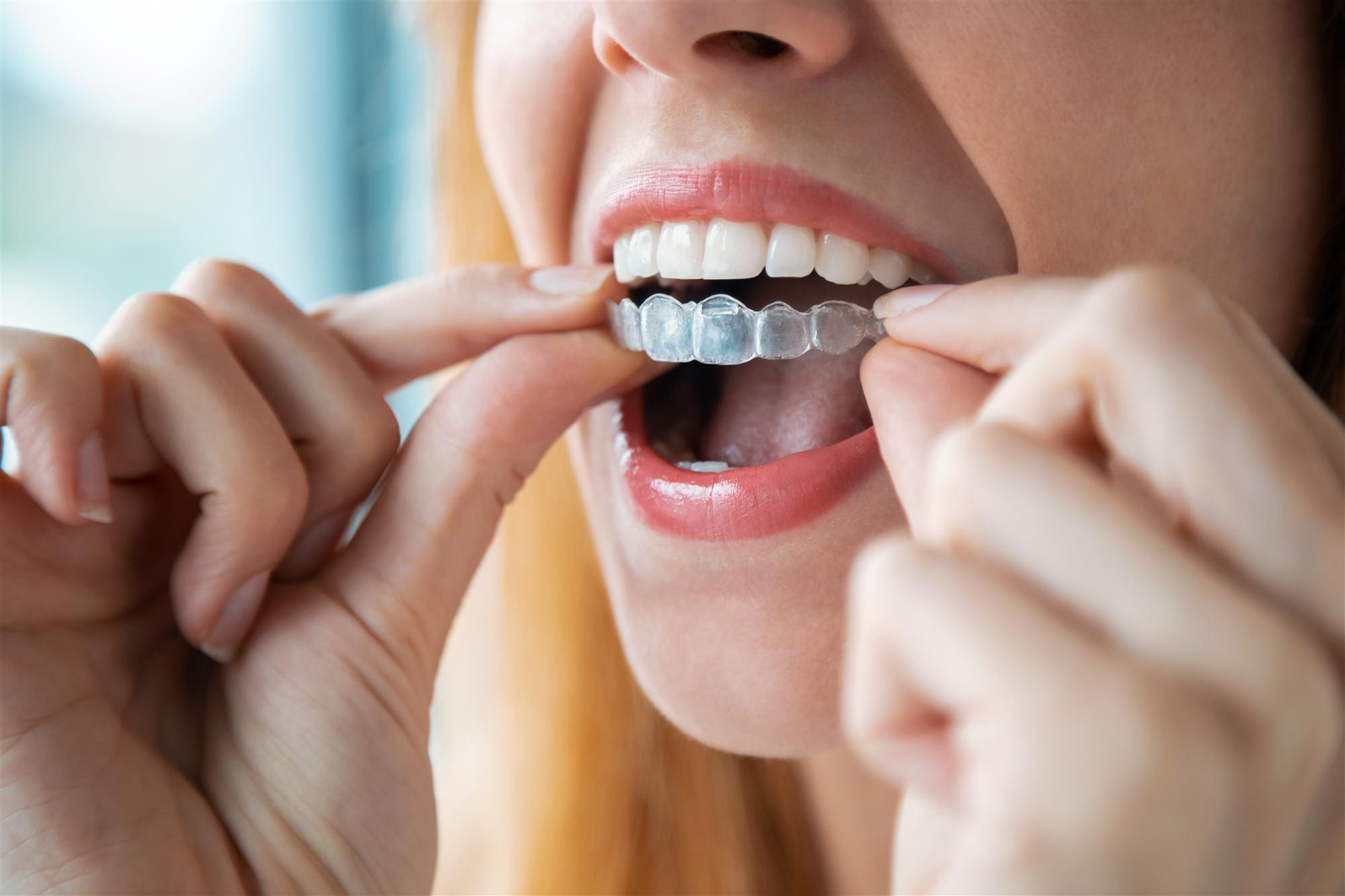
Invisalign Clear Aligner Treatments for Waukesha County

Fair Pricing & Easy Scheduling at Our Dousman Location
Dr. Whalen provides Invisalign treatment for patients who want to straighten their teeth without traditional brackets and wires. Removable clear aligners, Invisalign provides a discreet orthodontic option for correcting many common alignment and bite concerns.
Your treatment plan is customized around your teeth, bite and smile goals. Patients from Dousman, Waukesha County and surrounding southeastern Wisconsin communities can meet with our team to discuss Invisalign costs, expected treatment time and available payment options.
How Does Invisalign Work?
Invisalign treatment uses a series of clear aligners custom-made to gradually move your teeth into their planned positions. After evaluating your teeth and bite, your dentist develops a treatment plan and provides a sequence of aligners designed for different stages of tooth movement.
Most patients wear their Invisalign aligners for approximately 20-22 hours per day, removing them for eating, drinking anything besides water, brushing and flossing. You progress through new sets of aligners as treatment continues. Because Invisalign aligners are clear and removable, they offer a less noticeable alternative to traditional braces without requiring major changes to your normal eating habits.
How Long Does Invisalign Take?
Invisalign treatment time depends on the amount of tooth movement needed, the complexity of your case and how consistently you wear your aligners. Many treatment plans take several months to more than a year. Patients may notice changes within the first few weeks, although completing the full treatment plan is important for reaching the intended result. Dr. Whalen can provide a more personalized treatment timeline after evaluating your teeth.
What Can Invisalign Fix?
Invisalign clear aligners can treat many mild to moderate orthodontic concerns. Your dentist will evaluate your teeth and bite to determine whether clear aligners are appropriate for your specific needs. Common problems Invisalign may address include:
-
Crooked or Crowded Teeth: Clear aligners gradually reposition overlapping or crowded teeth to create better alignment and spacing.
-
Spacing and Gaps: Invisalign treatment can gradually close unwanted spaces between teeth and create a more even smile.
-
Overbites: Certain overbite cases may be treated by carefully planned tooth movement with Invisalign aligners.
-
Underbites: Depending on the cause and severity of the bite problem, clear aligners may help improve some underbite cases.
-
Minor Tooth Shifting After Previous Orthodontic Treatment: Adults who previously wore braces may use Invisalign to correct teeth moving out of their former positions.
More complex orthodontic cases may require another treatment approach. An Invisalign consultation is the best way to determine which option fits your smile.
 Are You a Good Candidate for Invisalign?
Invisalign can work well for teens and adults who want a removable, less noticeable way to straighten their teeth. Successful treatment also requires patients to consistently wear their aligners as directed.
| Type of Person | Reason for Invisalign Suitability |
|---|
| Professionals |
Clear aligners provide a discreet appearance at work and during meetings |
| Teenagers |
Removable aligners make brushing, flossing and eating easier |
| Public speakers |
Clear aligners provide a less noticeable orthodontic option |
| Athletes |
Removable aligners eliminate permanent metal brackets and wires |
| Patients with mild to moderate orthodontic issues |
Invisalign can treat many common spacing, crowding and bite problems |
| Patients with good self-discipline |
Treatment relies on consistently wearing aligners for approximately 20-22 hours each day |
| Adults with previous orthodontic treatment |
Invisalign may correct minor shifting after previous braces treatment |
How Much Does Invisalign Cost in Wisconsin?
The average cost of Invisalign in Wisconsin without insurance ranges from $4,000 to $8,000, with treatment starting around $3,000 for minor corrections. Your final Invisalign cost depends on the complexity of your orthodontic needs, the length of treatment and the number of aligners required.
Dental insurance may help lower your out-of-pocket cost when your plan includes orthodontic benefits. Dousman Family Dental can review your treatment needs, discuss available insurance coverage and provide a personalized Invisalign price estimate during your consultation.
Invisalign vs. Braces: What's the Difference?
Both Invisalign and traditional braces gradually reposition teeth, but the treatment experience is different. Traditional braces use fixed brackets and wires, while Invisalign treatment uses removable clear aligners. Many patients prefer Invisalign because the aligners are discreet, removable for meals and easier to brush and floss around.
Invisalign also requires consistent daily wear, so patients need to follow their treatment plan carefully. Traditional braces may still be recommended for certain complex orthodontic problems. Dr. Whalen can evaluate your teeth and explain which option is better suited to your needs.
How to Clean Invisalign Aligners
Rinse your Invisalign aligners regularly and gently brush them with a soft toothbrush using products recommended by your dentist. Avoid exposing aligners to very hot water, which may affect their shape.
Brush and floss your teeth before putting your aligners back in whenever possible. Keeping both your teeth and aligners clean helps limit food residue, plaque and unwanted odors during treatment.
Schedule an appointment with Dr. Whalen to learn more about Invisalign vs. braces and find the right treatment for your smile.


 PO Box 187, Dousman, WI 53118
 Invisalign
Is Invisalign Worth it?
Invisalign
Is Invisalign Worth it?